

tw: this series is what everyone actually thinks of you

There’s a near-crippling second-hand embarrassment that comes from watching someone you know fake it.
When they pretend to be someone that they’re not and expect you to go along for the ride. I’ve seen this take several forms, but none are so offensive to me as when I’ve watched my friends morph into changlings for the sake of… approval.
I have a friend who is by far, one of the most unique people I know.
Her apartment is filled with items from all over the world, her bookshelves aren’t just curated, they’re well-read, and her style ranges from punk rock princess to off-duty model. But whenever we have to go somewhere together, she shows up looking like someone I’ve never seen before. I used to think she was just being exploratory, the Seeker archetype experimenting and evolving, using different settings to discover new eras of her personal style. But over time, I realized that her efforts are much more calculated: She is a shape shifter, and the worst kind.
She caters who she is for whoever’s in the room. If were at an auction she tries to look like Jackie O, if were going to Skims all the sudden she’s a Jenner. She has this insatiable need to be approved of by whoever she deems the silent majority, and now that I see it, I cant unsee it. This person who I know and adore, flinches, winces, contracts. She edits herself down, she becomes palatable. And as much as I hate to say it, I realized a very distinct consequence to her actions: it’s made me lose respect for her.
I'd bet you have a friend who does this.
The harder question is whether she'd say the same about you.

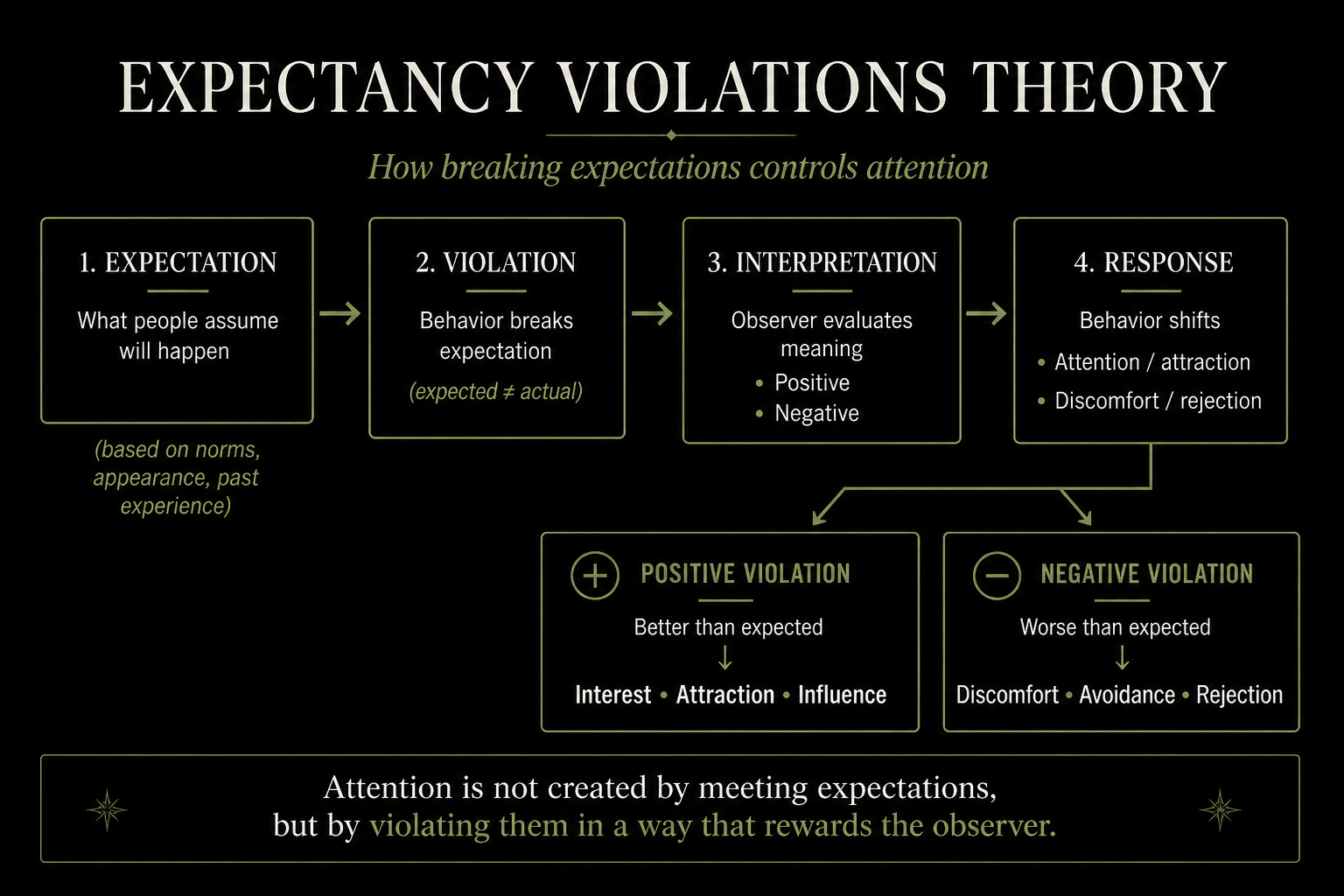
Knowing someone is really just knowing what to expect from them.
The closer you are, the more precisely you can predict what they'll do, what they'll choose, how they'll show up. After some time you don’t have to guess anymore, what you know about them becomes who they are. Their reputation becomes fixed.
The math is simple and brutal:
Exceeding expectations will make people think more of you. Their opinion of you rises, and your baseline reputation recalibrates upward. That higher version of you becomes the new standard you're measured against.
But fall short of expectations, and something much more dramatic happens. Your baseline reputation doesn't move, but their respect for you does. They don't update what they know about you. They update what they think of you.
There are few things more expensive than being known for less than you are.
If you don’t know where to begin, start from the beginning.
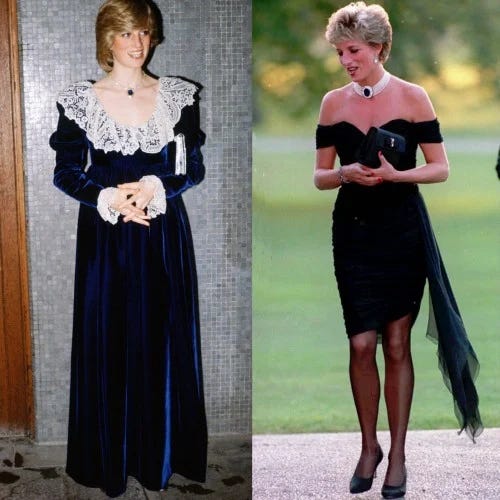
For the first decade of her public life, Princess Diana’s wardrobe was institutional, deferential, and highly managed. She was dressed to reflect the monarchy, not herself. Her style had established exactly how seriously she was meant to be taken, and everyone around her behaved accordingly.
The revenge dress changed everything. The Palace had spent years controlling her wardrobe because they understood that style was one of the most powerful political instruments Diana had. The moment she stopped dressing for their approval, the power dynamic shifted permanently.
Whoever is able to control how you look controls how seriously you are taken.
When you dress beneath your potential for long enough, it’s suicide. Once the people in your life stop expecting anything from you, they’ll stop offering you anything, either. Opportunities, introductions, considerations, all of it gets quietly rerouted to the person who has been showing up as someone worth betting on. That’s the self-fulfilling prophecy. Not that you’ll feel like less, but that you’ll get treated like less, because you kept showing up as less, and less became your gold standard.
The next time you reach for the safer option, stop.
Not to reconsider the outfit. To identify who, specifically, you are editing yourself for. Not the occasion. Not the dress code. A person.
Ask yourself:
Who am I thinking about right now?
What specifically do I think they will conclude if I wear what I actually want?
Have I ever tested that conclusion, or have I been operating on an assumption?
How long have I been editing myself for this person?
What did I want to wear before I started second guessing?
What specifically did I change, and what was the stated reason I gave myself?
If that person weren’t attending, would I still have made the same edit?
The longer you do this, the clearer you’ll be able to see who’s actually in control of how you look. That’s where the power is, and that’s where you’ll go to retrieve it.
With great personal aesthetic,
Alexandra Diana, The A List