

rip american apparel, bury me in my ~disco pantzzzz :3
The 5 Core Competencies of Scene are:
Sculptural Hair, Maximalist Makeup, Slender Silhouette, Layered Iconography, and Gender Ambiguity.

We’re back, baby.
My Chemical Romance currently has 19.1 million monthly Spotify listeners, with the official music video for "Welcome to the Black Parade" racking up 417 million views on YouTube. To put it further in perspective, roughly 650 million people watched Neil Armstrong walk on the moon in 1969.
The single most watched television event in human history is about to be eclipsed by what most parents prayed was just a phase.
Gen Z is teasing their hair, buying raccoon-tail extensions from Amazon, layering chokers from Urban Outfitters, posting bathroom mirror selfies with the same MySpace-angle precision that defined the original subculture two decades ago. But while it may look convincing in a 30 second video…something’s just off.
Scene originated before the internet was the primary theater of identity. MySpace, AOL, the digital camera, all of it existed alongside real life rather than in place of it. Other than ramping up the exposure to jump-scare level, nothing was edited. There was no obsession with curation. The internet was just a place to log into, when social media was actually social and the biggest question you had to figure out is how the to code your layout so no one could pause your background music. The current revival is the inverse: everything optimized, lit correctly, perfectly curated for a thirty-second video. The chaos and imperfection that made the original aesthetic has been edited out entirely, and what’s striking is that no one seems to realize that’s what’s missing.

Every dominant aesthetic of the last decade, Clean Girl, Quiet Luxury, Old Money, is organized around restraint and the appearance of effortlessness. Scene operated on the opposite logic: the effort was the point. Drugstore products smeared on the carpet next to a flatiron burning at 400 degrees, monthly runs to Sally Beauty for bleach and Manic Panic. Three hours spent hand-glueing extensions from a five-pack of strung-out neon. The careful curation of a MySpace Top 8, which functioned as the mood ring for your social hierarchy and public relationship status. The commitment to the complete extraversion of appearance was non-negotiable, and it’s the lack of outright maximalism, the high-effort visibility that’s missing the most.
The Gen Z revival is not nostalgia, it’s the desire to live in a world that’s not curated by an algorithm, fed to you in little perfect doses. It’s the yearning to smear outside the lines, the idea that wanting to look a certain way was reason enough to do it. In our epidemic of sameness, the refusal to be beige is a grand statement, indeed.
The Sonic Container
In early 2000’s SoCal, the hardcore and metal music venues started seeing a new crowd: Young men and women who were religiously devoted, dressed in outlandish outfits that were both coordinated yet chaotic. They were called Scene Queens, and it was not a compliment. These walking pop-art angels stuck out like a sore thumb in these grimy DIY venues, and naturally were accused of only being there to get attention— how could you possibly care about music when you're dressed like that?
MySpace launched in 2003, and by 2006 had surpassed Google as the most visited website in the United States, becoming the first platform where visual self-presentation was the primary currency. The massive difference between the online fame of then and now is that their influence wasn’t broadcast by the platform, it was produced by it. No algorithm existed, just a buncha kids with a digital camera and a Photobucket account. For a brief, gorgeous window of time between 2004 and 2010, this was the most covetable look of all. But to really understand Scene, you had to know what genre you associated with. And the only way to do this was through music.
My Chemical Romance released The Black Parade in October 2006, a concept record built around the theatrical, fictitious narrative of a dying patient. Gerard Way drew the initial uniform sketches himself, pulling from actual vintage Napoleonic hussar uniforms that he then handed to Colleen Atwood, a four-time Academy Award-winning costume designer whose credits include Chicago, Memoirs of a Geisha, and Alice in Wonderland. The resulting look, black military frogging, silver braids, operatic, gothic, became one of the most replicated looks in Scene history, reproduced, piece by piece, from whatever was available.
Fall Out Boy's album From Under the Cork Tree was a cultural phenomenon. At the same time that Hedi Slimane was presenting Dior Homme on runways around the world, Pete Wentz was doing the same without the budget or the Paris address. He was the face of a new boyish charm, one that had eyeliner, drainpipe jeans, side-swept fringe, the easy androgyny of someone who leaned into femininity. His heterosexuality was constantly referenced as a way to balance his gender fluidity, but it was expansion that people craved. His look was so successful because it functions as evidence of a broader shift in how masculinity could be expressed. Wentz’s personal aesthetic created a mania of duplicates: Studded belts and drugstore eyeliner became the daily uniform in the hallways of every public school in the country, bringing forth an era of boys who viewed makeup as an aesthetic choice, not a gender statement.


Paramore released Riot! on June 12, 2007, when Hayley Williams was eighteen years old. Her orange hair was instantly iconic, cut in chopped layers and colored with bleach and Manic Panic, the same supply chain as ever other Scene kid in the country. On stage she wore micro skirts over ripped tights, custom studded Vans, her tiny silhouette cut short and tight. Her bombastic style was directly responsible for a different kind of shopping boom: Her audience wasn’t buying a finished product, they were buying the components. The bleach, the dye, the tights, the studs, all of this had to be DIYed to be seen as authentic. Williams was the only woman fronting a group of boys, wearing the Scene aesthetic at the same volume as Way and Wentz, and her audience adored her for it. The Riot! era look has no runway equivalent, and no high fashion parallel.
What connected these three distinct visual iterations, the Gothic militaria of MCR, the street-level androgyny of Wentz, the DIY maximalism of Williams, was the same underlying logic: the clothes were produced, not purchased. Each look required daily construction, specific materials, and a practitioner relationship to appearance that separated the people building the aesthetic from the people wearing a version of it.
Céline under Phoebe Philo dominated the fashion industry from 2008 through 2018 with a wave of minimalism built on restraint and neutral color. Normcore emerged as a documented aesthetic movement in 2013, organized explicitly around the rejection of subculture and self-expression through clothing. The skinny jean remained but became mainstream, losing the subculture coding as moms ran to purchase them from The Gap. When MySpace was replaced with Facebook, the embers of this aesthetic were swept under the rug alongside Indie Sleaze and all other aesthetics created through maximalistic self-expression. By 2010, Hot Topic had been in decline for 21 straight months, the studded belts, and band tees that had supplied the Scene aesthetic since 2004 were replaced by pop culture licensing, gaming franchises, and anime.


SeeYouSpaceCowboy formed in San Diego in 2016, the same year the first wave of MySpace nostalgia began circulating online. While TikTok's #scenecore revival is an attempt to copy and paste, former vocalist and visual architect Connie Sgarbossa was using her own point of view to sharpen the rounded-off edges. Sgarbossa discovered her femininity specifically within the screamo and hardcore genres, and where the original Scene addressed darkness through theatrics, she addressed it as documented fact. Writing about addiction, mental health, and gender identity in real time, without resolution.
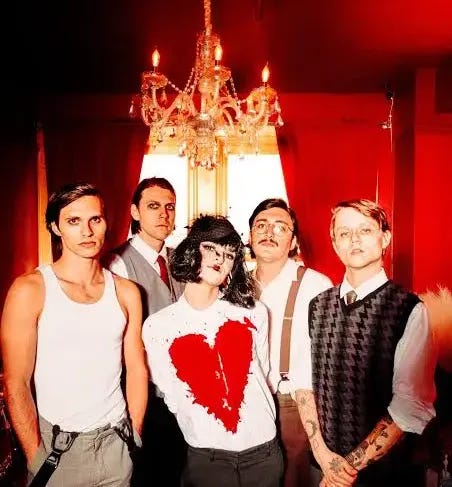
What the revival is searching for isn’t really the aesthetic, it’s the act of building one.
If you or someone you know is struggling, Crisis Text Line is available 24 hours a day. Text HOME to 741741. You are important, and your life is worth saving.
The 5 Core Competencies of Scene, expanded
Sculptural Hair
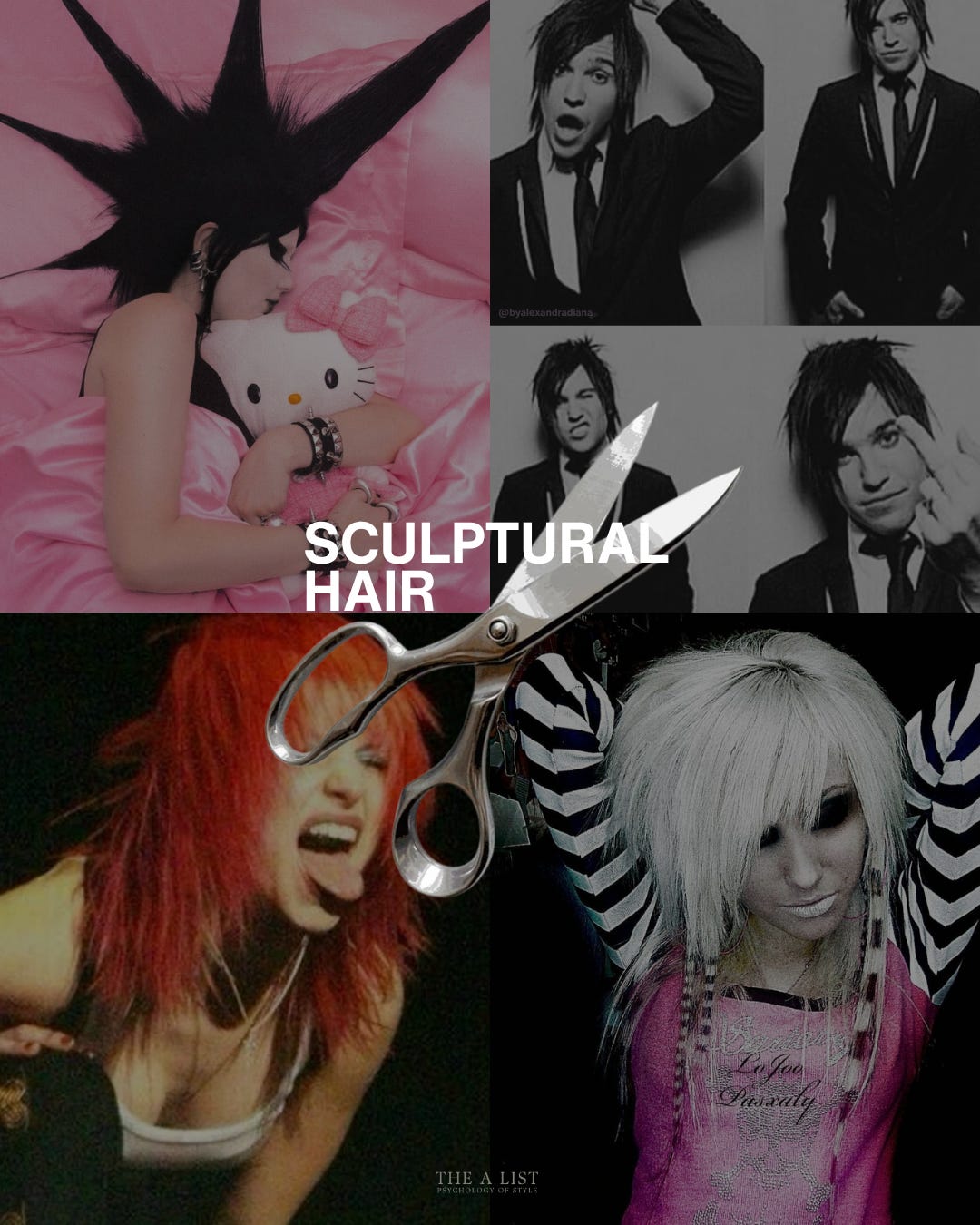
Teased volume, chemically dyed color, flat-ironed, swept. Outside of women born and raised in the bible belt, no other group has mastered the physics required for this kind of hair. Tremendous effort that required daily maintenance and specific materials, streaked with colors and patterns that only exist inside the mind of Lisa Frank.
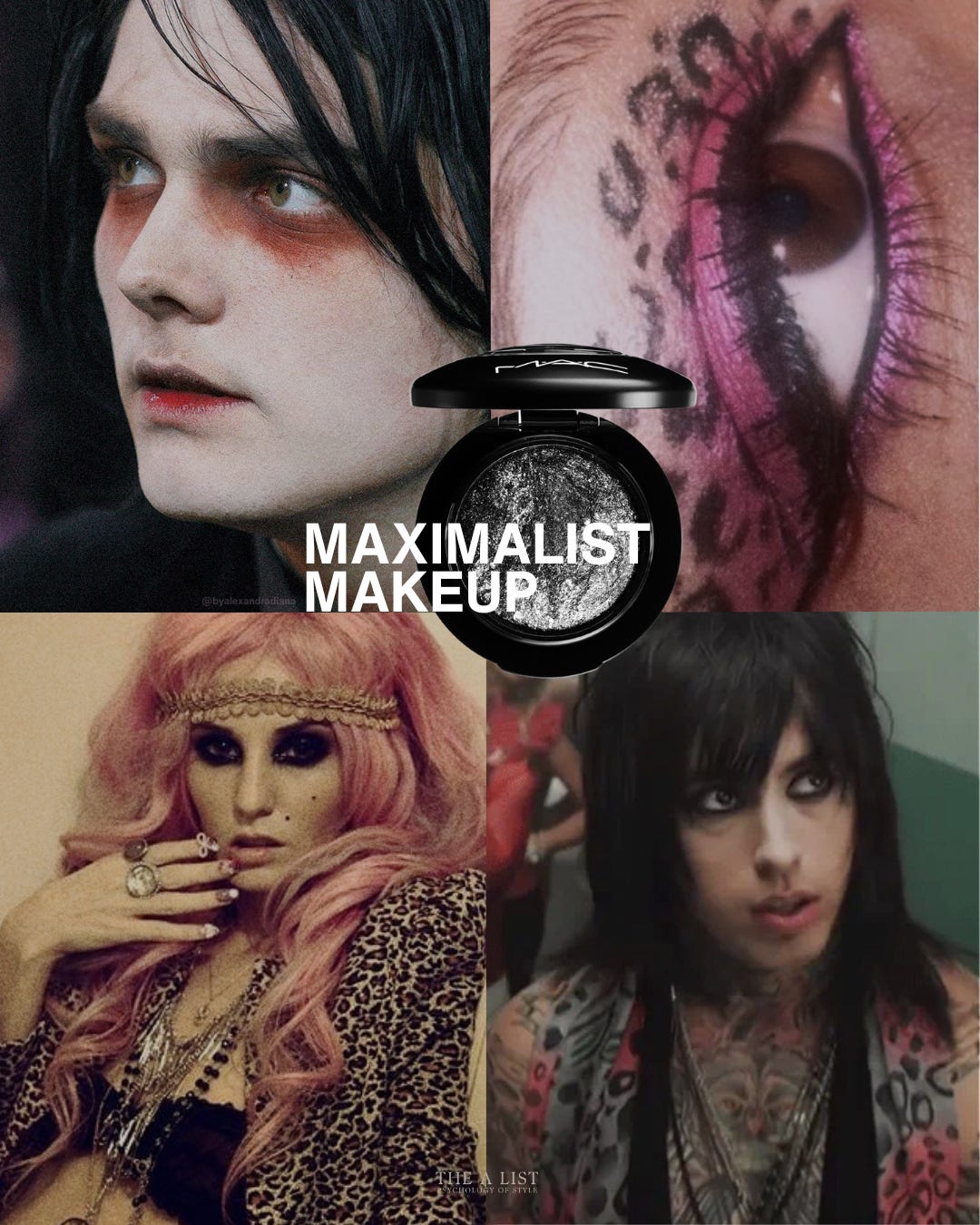
Maximalist Makeup
Heavy black liner pulled to your temple and coated with bright eyeshadow that rose to your brow bone. Hand-painted nails were worn daily, along with caked foundation, light lipstick, and white eyeliner. Scene is one of the only aesthetics that prides itself on the amount of effort required to master the look, and the conviction that how they looked mattered enough to spend four hours getting it right.
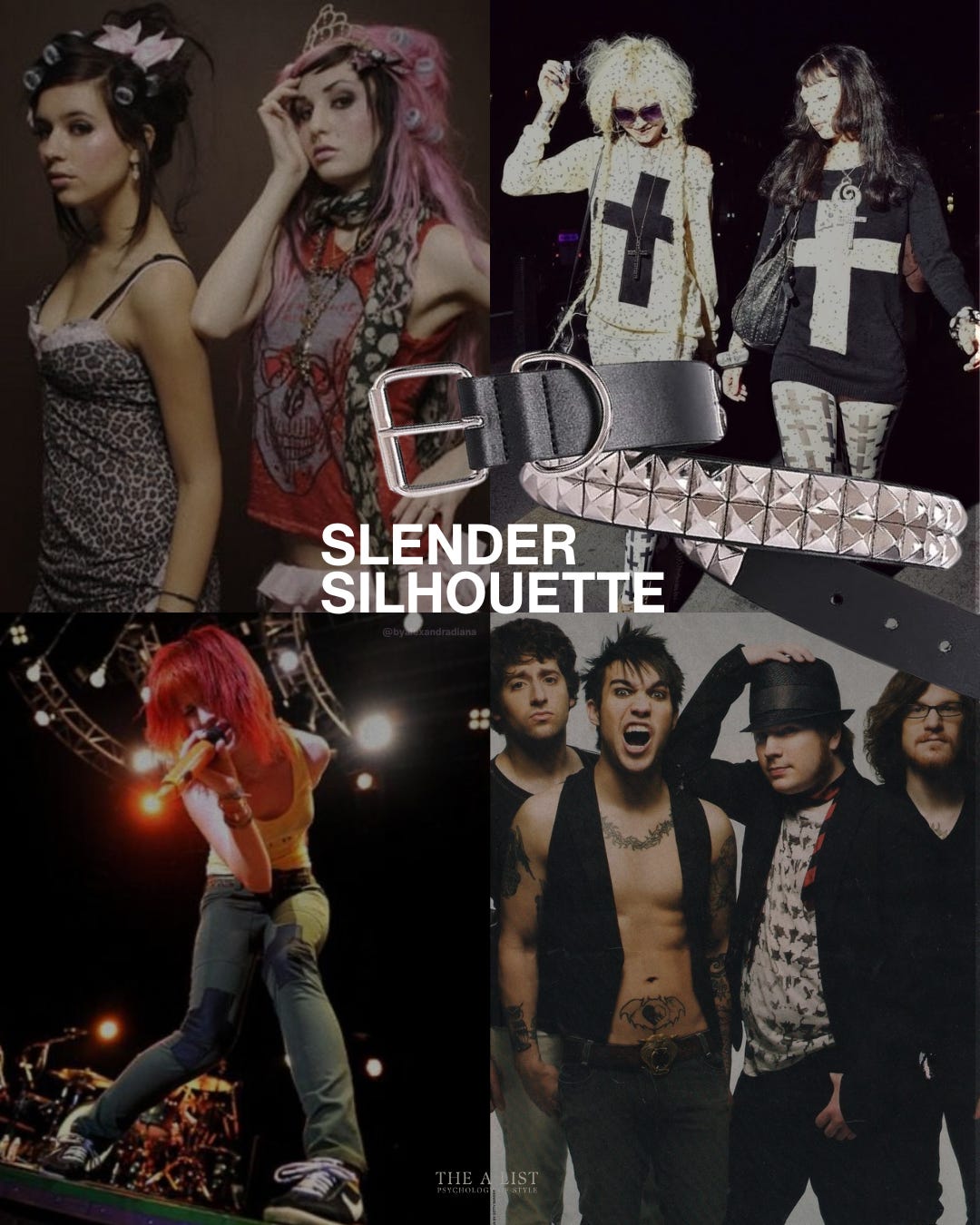
Slender Silhouette
Tight, low, and layered. The silhouette amplified feminine markers rather than removing them, producing an androgynous read through accumulation rather than subtraction. Skinny jeans, Sk8-His, high-tops, long tanks and ripped leggings all glued to the body.
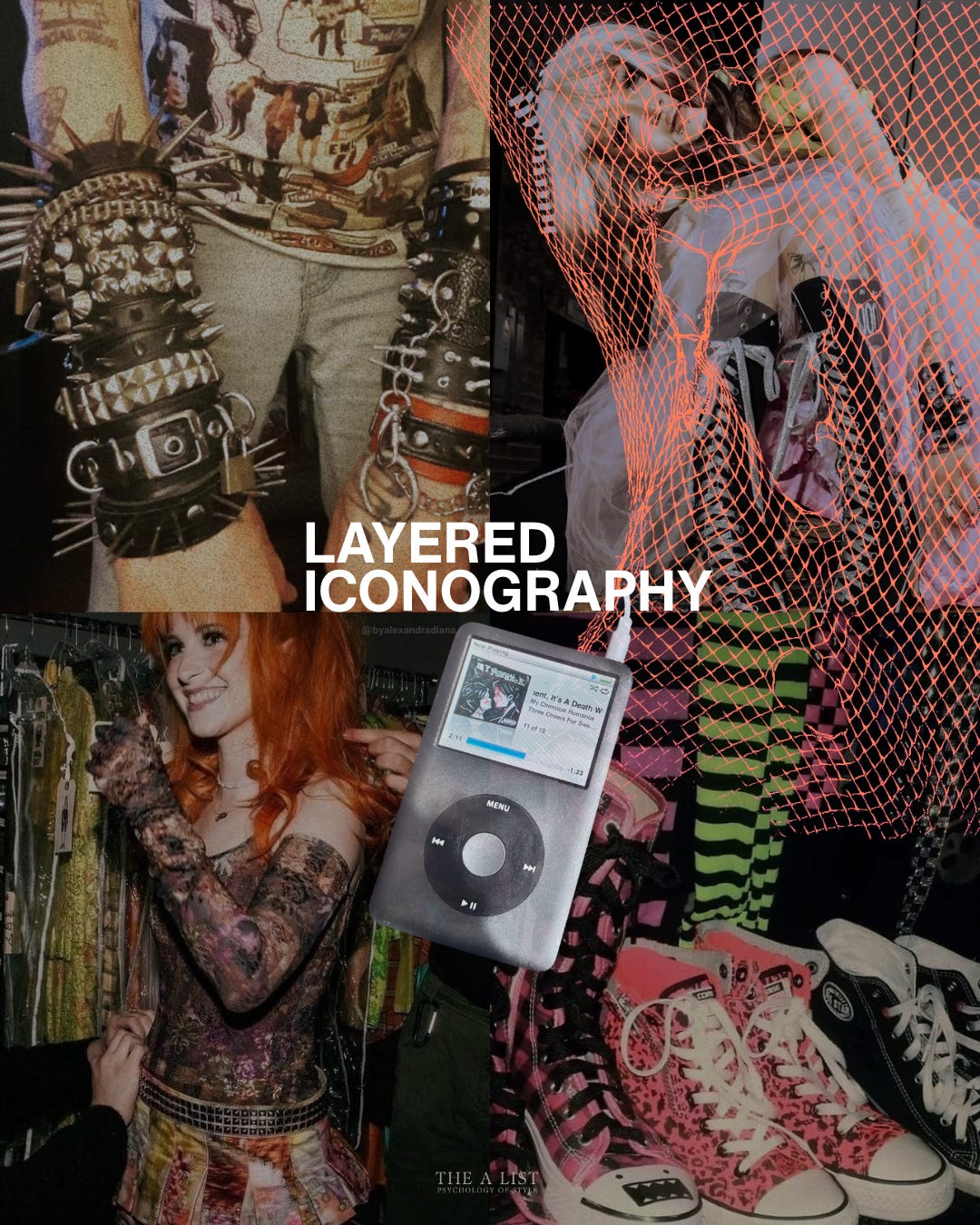
Layered Iconography
Band tees, stacked bracelets, pins, patches, layered chokers, a collection from different shows, bands and moments. The iconography functioned as a public archive of subcultural affiliation, and quite literally could not be purchased. The biggest difference today is that this is so easy to do performatively, but in its original form, each layer represented the individuals personality.
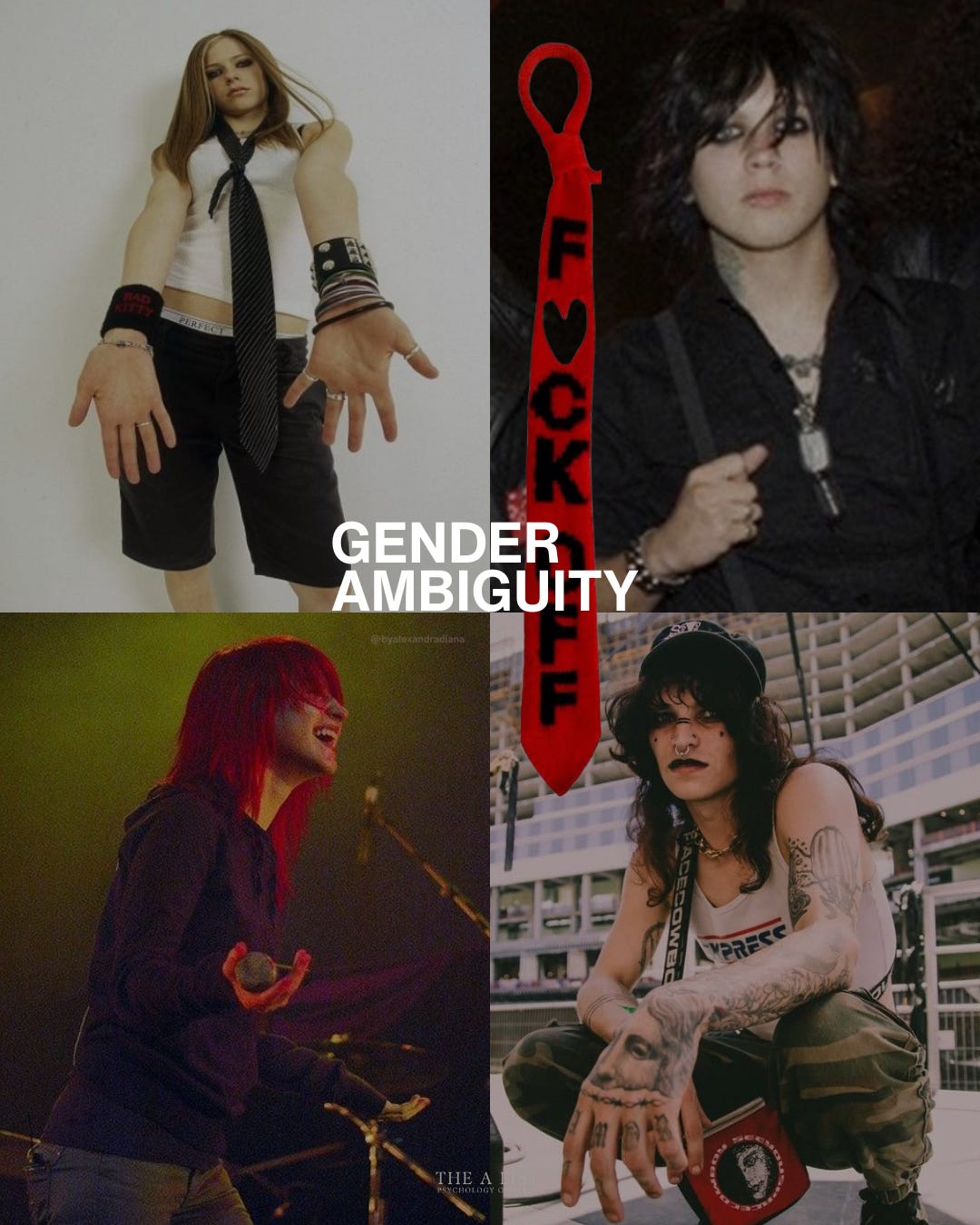
Gender Ambiguity
Scene is the only aesthetic in the last twenty years that achieved androgyny through excess rather than erasure. The femininity was so amplified that it crossed into something else entirely because the more feminine markers you added, the less feminine you became. The commitment to being more rather than less, the sheer volume of the presentation, felt dominant, not submissive. Scene proved something significant: androgyny doesn’t always require neutrality.

The Gen Z Scene revival is happening for a reason, but its not nostalgia.
It’s the realness, the raw edge, the heart ripped to pieces and worn on your sleeve that makes people want to choke on the algorithm just to spit it back out. In a world of consumerism, this is an aesthetic you can’t buy. True Scenecore will always be embodied by people who build it themselves, by hand, in shit lighting with drugstore products, for an audience of 200 people on a platform that no longer exists.
If you want the irl version, leave your phone at home, and go see a show. xx
With great personal aesthetic,
Alexandra Diana, The A List

Romantic Gothic: to yearn, to mourn, to lust

Romantic Gothic: visual severity anchored in emotional depth.
Ok, first of all THANK YOU FOR THIS and yes, I added my initial comment before I read the whole piece🙃 but WOW, you captured a beautiful moment in time, one that truly can't be copy-pasted.
By the time I found emo and scene, I was in community college and it felt like such an important part of my young adult identity. FOB specifically was hugely influential on me. I was that girl that said "Take this to your grave" was my favorite album to prove I was a real fan. Going to shows, hiding a digital camera in your bra, pushing your way to the front of the stage only to get the wind knocked out of you from being pushed up against the gate by thousands of other screaming, sweating bodies. What a frickin TIME!
There's a book I read recently and can't recommend enough called Where Are Your Boys Tonight by Chris Payne. If you want to feel transported to emo's humble, DIY beginnings in New Jersey, you gotta read it. It's SO. GOOD!
I can’t contain my excitement for this piece😆