


“Perhaps my only real expertise,
my only real talent,
is to endure beyond the endurable”
Jeff Vandermeer, Annihilation
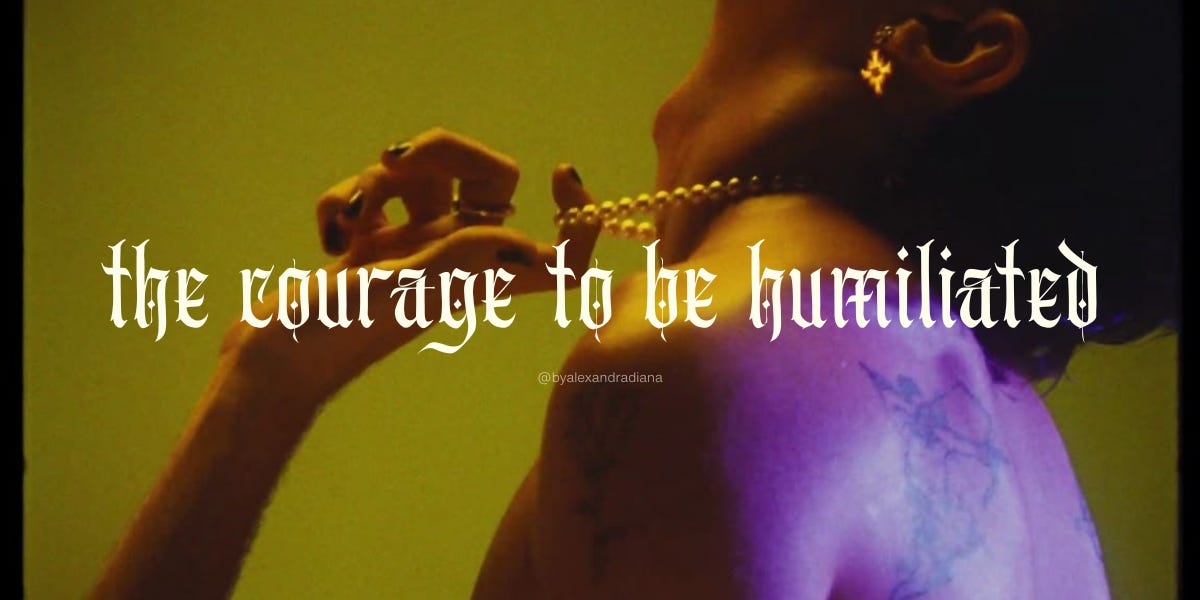
I’ve realized the main difference between myself and those around me is that I believe dignity is the courage to tell the truth about how I feel, no matter how gut-wrenching or humiliating, while others believe dignity is gained by not saying anything at all.
I’m someone who feels things so deeply it feels less like they’re seeping from my pores, but that they’re breaking all my bones. Like if I don’t say what I feel, whats truly on my mind, my body will collapse under the weight of my inaction.
I suppose that in this regard, I am both a stoic, and an absurdist.
I am stoic in what I am willing to endure, and absurdist in that I find the whole ordeal of being human so spectacularly ridiculous that I see no reason to pretend otherwise. I will tell the truth, knowing perfectly well that it may accomplish nothing, because I find the alternative far more humiliating. If humiliation is the price of sincerity, then I suppose I have developed exquisitely expensive taste.
Yet I would be lying if I claimed that I enjoy being misunderstood. I would be lying if I said that every confession leaves me feeling liberated. That I’ve never wished I could take something back, that I’ve never felt an avalanche of silence following my own vulnerability, and wondered whether I had made a terrible mistake.
I have. Of course I have.
I have experienced this enough times to know that honesty offers no guarantee of relief. It does not promise understanding, reciprocation, forgiveness, or even acknowledgment. Sometimes you tell the truth, and the only thing that changes is that now, someone else knows.
And still, I would rather know that I was brave.
I used to think this was simply part of my communication style, but now I think otherwise. I think it’s my attachment style to myself.
We spend an extraordinary amount of time worrying about being abandoned.
We pick apart behavior, search for evidence of devotion, measure the security of our relationships by how confidently we believe they will remain. Yet I wonder, in the midst of all this, how often we consider the ways we abandon ourselves. How often do we reject our own feelings, neglect our own convictions, belittle our own desires, in the hopes that in doing so, we will be easier to love?
I can’t live with the insecurity that wells inside me when I know I’ve rejected, neglected, or abandoned myself. There is no external validation that will alleviate me from that feeling. The failure to speak, to act, to try, to change, in the name of fear. The greatest betrayal I am capable of experiencing is the one I commit against myself, because it is the only betrayal from which I cannot walk away.
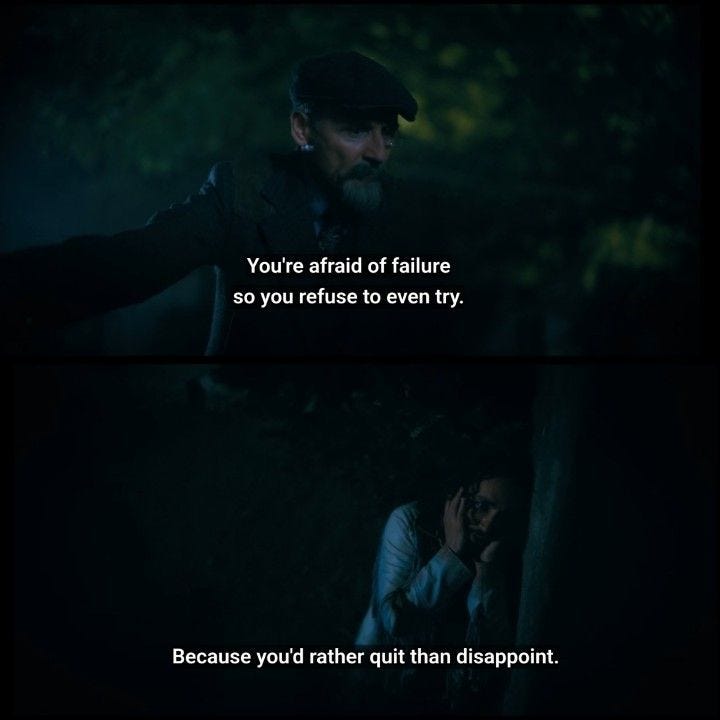
We have developed an almost religious devotion to the appearance of being unaffected.
We admire the person who can conceal their disappointment, swallow their affection, and endure rejection. We have come to regard the ability to hide our humanity as evidence of our superiority over it. Fools.
Consider how differently we perceive two people who feel exactly the same thing:
One admits to loving someone, and risks rejection.
The other says nothing, and privately suffers.
Most would call the first desperate and the second dignified.
But what makes the second person morally superior? Their ability to conceal what they feel? Their willingness to accept some fictitious defeat, one that’s only happened in their mind? Or is it simply their ability to avoid humiliation?
It goes without saying that there is a massive void of difference between remaining silent for the greater good, and keeping silent because you’re terrified of what the truth might cost you. What’s extraordinary to me is how often we act like we don’t know the difference.
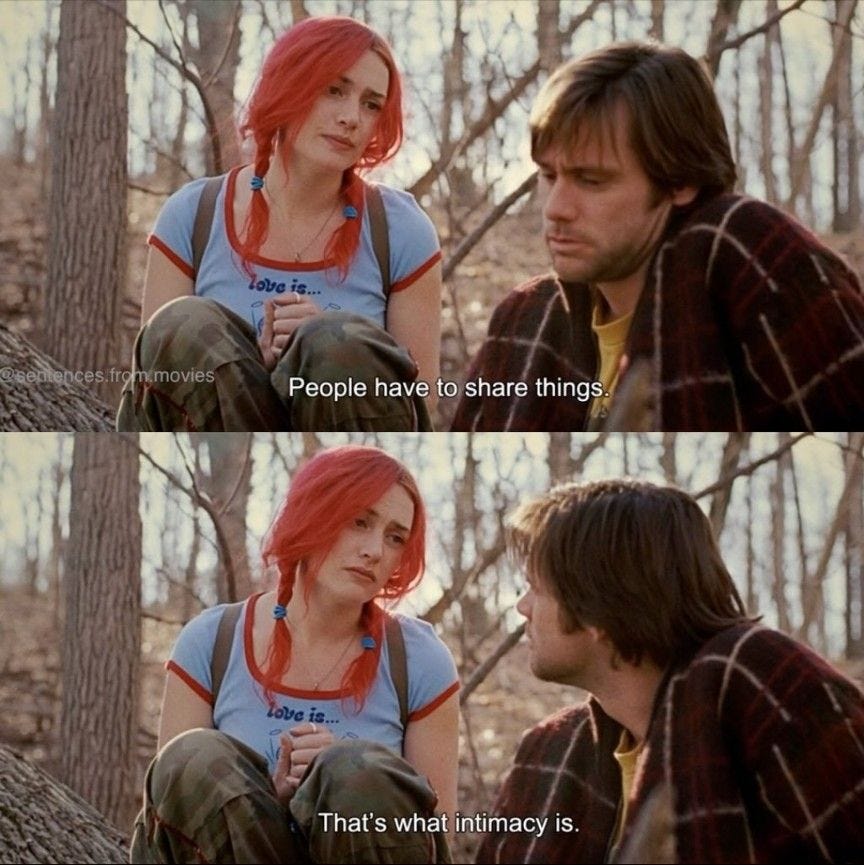
We’ve confused the ability to control how others perceive us with the ability to control ourselves.
We’ve turned dignity into a social achievement, measured by how convincingly we can appear to want nothing, need nothing, feel nothing that might expose us to the judgment of fucking strangers.
I can say with confidence that, for me, there is no dignity to be found in keeping my emotions to myself. All that, just to avoid the possibility of shame? Where the fuck does that even get me? What have I actually preserved? An image? A reputation? The satisfaction of knowing someone else has no idea how much I care?
What a miserable consolation prize.
What becomes of a person who spends their entire life making these small concessions? Who learns, no, conditions themselves, over and over again, that the safest way to exist is to become increasingly unfamiliar to their own reflection?
True dignity isn’t the ability to know who you are. It’s your willingness to own it.
To proclaim it, ardently, when you know you’re no knight in shining armor. When the truth you reveal exposes something foolish, contradictory, selfish, or so painfully ordinary about you.
Why, you ask? Why must this be the case? Because dignity is not chaste, nor precious, some beautiful thing you can wrap in a bow. Dignity is bloodstained, tattered, weathered. It’s the cost of revealing who you really are, how you really feel, and what you are willing to stand for, without any assurance that the world will reward you for doing so.
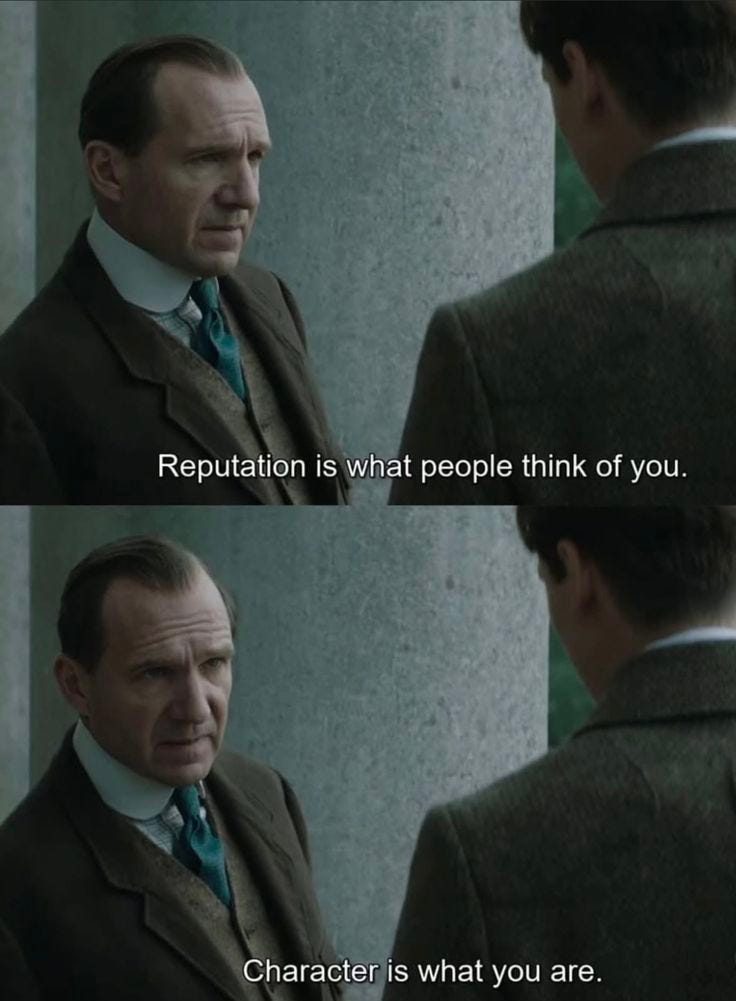
I urge you, choose yourself.
Even if you are morally gray, without the popular vote, and alone in your opinion.
Foolhardily, ill-advisedly, even if you cannot understand why you feel the way you do, have the courage to examine it. To claim responsibility for it. To act upon it when you believe it’s the right thing to do. Let the waves crash over you, let it rip you limb from limb.
You’re going to be sad, anyway. You’re going to feel alone, anyway. You will be misunderstood, miscategorized, slandered and abandoned at some point in your life, no matter what you do. Do not allow these actions to be ones you commit against yourself.
I want to arrive at the end of my life knowing that I risked being wrong. Humiliated and downtrodden, I allowed myself to be seen in all the terrible, ridiculous, magnificent contradictions of being human. And if the price of that existence is the occasional knowledge that I have made an absolute fool of myself, then so be it.
I refuse to spend my life worshipping a dignity that demands my own abandonment as its sacrifice. I am my own god, and my own martyr.
This is all I know, for certain.
With great personal aesthetic,
Alexandra Diana


Thank you this was amazing!